-
Sold out


Brown Flaxseed (Whole) 500 g
Brown Flaxseed (Whole) 500 g
Out of stock
Flaxseed consists of small, flat seeds measuring approximately 2–3 mm. When soaked in water, the seeds swell and release a natural mucilage. Brown flaxseed is valued for its high content of dietary fiber and plant protein.
How to Use
Whole flaxseed can be used in many ways:
as an addition to muesli, yogurt, sauces, salads, soups, and baked goods such as bread or oatmeal cookies,
or even as a topping for sandwiches.
Flaxseed is most commonly consumed after soaking. Pour half a glass of water over 2 teaspoons of flaxseed and cook for about 15 minutes. Consume 2–3 times per day.
Ingredients
100% flaxseed (linseed)
Storage Conditions
Store in a cool, dry place, in a tightly closed container.
Naturally Occurring Minerals
Whole flaxseed is a natural source of:
Magnesium – helps reduce tiredness and supports normal muscle and nervous system function
Iron – supports normal formation of red blood cells and hemoglobin
Zinc – helps maintain healthy hair, skin, and nails
Nutritional Values
| Nutritional value | per 100 g | per serving (50 g) | %RI* per 50 g |
|---|---|---|---|
| Energy | 2096 kJ / 499 kcal | 1048 kJ / 250 kcal | 12% |
| Fat | 31 g | 15.5 g | 22% |
| of which saturated fats | 2.36 g | 1.18 g | 6% |
| Carbohydrates | 17 g | 8.5 g | 3% |
| of which sugars | 0.3 g | 0.15 g | <1% |
| Fiber | 18 g | 9 g | – |
| Protein | 28.9 g | 14.5 g | 29% |
| Salt** | 0.2 g | 0.1 g | 2% |
Vitamins and Minerals
| Mineral | per 100 g | per serving (50 g) | %RI* |
|---|---|---|---|
| Magnesium | 291 mg | 146 mg | 78% |
| Iron | 17 mg | 8.6 mg | 122% |
| Zinc | 7.8 mg | 3.9 mg | 78% |
RI – Reference Intake of an average adult (8400 kJ / 2000 kcal)
Salt content results exclusively from naturally occurring sodium
Natural variations may occur
Allergen Information
Packed in a facility that also processes products containing gluten, peanuts, soy, various nuts, and sesame seeds. Despite all precautions, the presence of these allergens cannot be completely excluded.
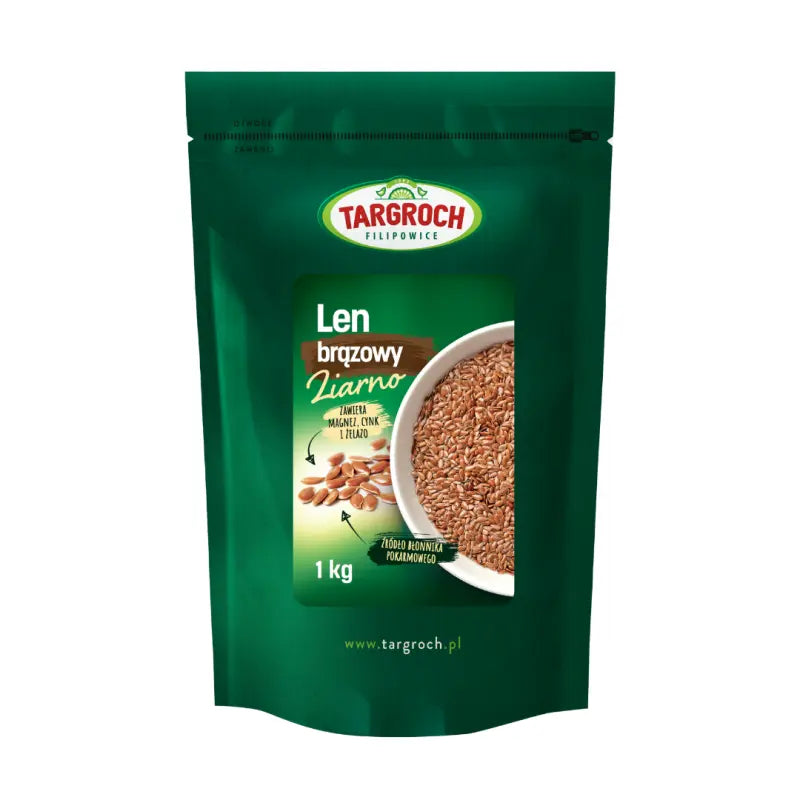

Brown Flaxseed (Whole) 500 g

Brown Flaxseed (Whole) 500 g
Flaxseed consists of small, flat seeds measuring approximately 2–3 mm. When soaked in water, the seeds swell and release a natural mucilage. Brown flaxseed is valued for its high content of dietary fiber and plant protein.
How to Use
Whole flaxseed can be used in many ways:
as an addition to muesli, yogurt, sauces, salads, soups, and baked goods such as bread or oatmeal cookies,
or even as a topping for sandwiches.
Flaxseed is most commonly consumed after soaking. Pour half a glass of water over 2 teaspoons of flaxseed and cook for about 15 minutes. Consume 2–3 times per day.
Ingredients
100% flaxseed (linseed)
Storage Conditions
Store in a cool, dry place, in a tightly closed container.
Naturally Occurring Minerals
Whole flaxseed is a natural source of:
Magnesium – helps reduce tiredness and supports normal muscle and nervous system function
Iron – supports normal formation of red blood cells and hemoglobin
Zinc – helps maintain healthy hair, skin, and nails
Nutritional Values
| Nutritional value | per 100 g | per serving (50 g) | %RI* per 50 g |
|---|---|---|---|
| Energy | 2096 kJ / 499 kcal | 1048 kJ / 250 kcal | 12% |
| Fat | 31 g | 15.5 g | 22% |
| of which saturated fats | 2.36 g | 1.18 g | 6% |
| Carbohydrates | 17 g | 8.5 g | 3% |
| of which sugars | 0.3 g | 0.15 g | <1% |
| Fiber | 18 g | 9 g | – |
| Protein | 28.9 g | 14.5 g | 29% |
| Salt** | 0.2 g | 0.1 g | 2% |
Vitamins and Minerals
| Mineral | per 100 g | per serving (50 g) | %RI* |
|---|---|---|---|
| Magnesium | 291 mg | 146 mg | 78% |
| Iron | 17 mg | 8.6 mg | 122% |
| Zinc | 7.8 mg | 3.9 mg | 78% |
RI – Reference Intake of an average adult (8400 kJ / 2000 kcal)
Salt content results exclusively from naturally occurring sodium
Natural variations may occur
Allergen Information
Packed in a facility that also processes products containing gluten, peanuts, soy, various nuts, and sesame seeds. Despite all precautions, the presence of these allergens cannot be completely excluded.